Clear answers for web privacy compliance.
Clearbasis exists to answer a question most website owners are quietly frustrated by:
“What does cookie compliance actually require for my site — and am I doing it right?”
For years, the web has been drowning in popups, consent prompts, and dark patterns that nobody likes — users, designers, or developers. And yet, most sites keep them “just in case”.
Not because the law clearly demands it. But because nobody explains the rules in a way people can actually rely on.
Clearbasis was created to change that.

The Numbers
- Consent transactions happen per day, through just one CMP vendor. (1)
- 400M
- Businesses doubt their compliance with data protection + cookie banner requirements. (2)
- 0/0
- Ad partners disclosed on some popular sites in a single consent transaction. (3)
- 1000+
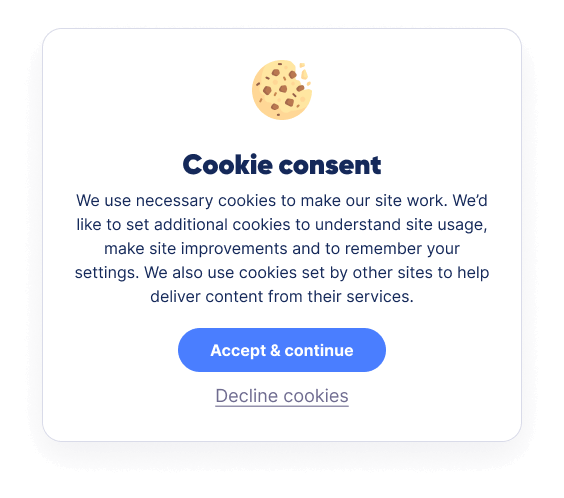
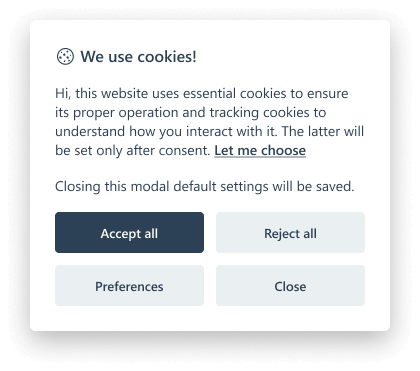
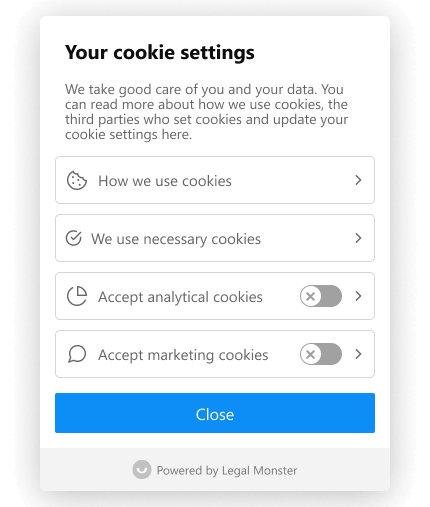
- Only 15% of cookie banners on EU/UK sites actually meet the legal minimum — yet 67% of sites show them anyway. (4)
- 10%
Sources: (1) OneTrust blog (Sept 20, 2021) | (2) (survey; 600 businesses across UK, Germany, Spain, Italy): Usercentrics press page (Mar 19-20, 2025) | (3) WIRED (Mar 20, 2024) | (4) Based on a large, automated analysis of 254,148 websites across 31 EU countries & the UK
Mission
Modern privacy regulation was meant to protect people.
Instead, it has too often resulted in:
- Worse user experiences
- Lower conversion rates
- Performative compliance
- And a quiet sense of fear-driven over-compliance
Most tools focus on deploying consent banners efficiently, but stop short of determining whether a banner is required at all — or whether the implementation actually meets legal requirements.
We took a different view.
What if the real problem isn't consent — but uncertainty about what's actually required?
The problem we saw
In practice, many websites:
- Don't use advertising or tracking cookies
- Only rely on functional or authentication storage
- Could legally operate without consent popups
At the same time, many sites that do show consent banners have implementations that don't meet basic legal requirements — despite the added friction.
Our approach
We determine what consent requirements actually apply — and whether they're being met.
We do this by:
- Observing how a site actually behaves in a real browser
- Detecting cookies, scripts, storage, and network calls
- Classifying what’s happening technically
- Applying explicit, deterministic regulatory rules
- Producing clear, evidence-backed decisions
Sometimes that means confirming that a site doesn't need a banner at all. Sometimes it means confirming that a banner is required — and whether the current setup meets the legal minimum.
In both cases, the value is the same: clarity you can stand behind.
Built for people who care about the web
Clearbasis is built for teams responsible for cookie compliance decisions — and who want to get them right:
- Website owners who want confidence in their cookie compliance decisions
- Designers who care about clean, respectful user experiences
- Developers who want to implement privacy correctly — without guesswork
- Agencies who need to give clear, defensible advice to clients
- Product teams who want compliance without compromising usability
- Legal and privacy professionals who want better technical insight into real-world implementations
- Anyone tired of adding popups “just in case”
We believe good privacy outcomes don’t require bad user experiences — and that clarity is better than fear.
A bit more about us
Clearbasis is not a law firm, and we don’t replace legal counsel
What we provide is something many teams are missing:
- A clear view of what their site is actually doing
- A transparent application of published regulatory guidance
- A documented, auditable rationale for decisions
That combination is often enough to replace guesswork with confidence.
Our guiding principles
Clearbasis is guided by a few simple ideas:
- Clarity over complexity
- Evidence over assumptions
- Transparency over dark patterns
- User experience matters
If the law allows a cleaner experience, we think websites should take it — and when it doesn't, they should implement consent properly.
Where we're heading
Clearbasis is starting with cookie banners because they're the most visible symptom of a deeper problem: uncertainty about what compliance actually requires.
Over time, we're building a broader compliance intelligence layer for the web — one that helps teams understand what's required, what isn't, and why.
Always with the same goal:
Turn ambiguity into a clear, defensible decision.